Tape In Extensions How To Apply And Remove

Tape In Extensions How To Apply And Remove

A Step-by-Step Guide Like a Professional

Summary:

“Tape-in extensions remain a favorite among stylists because they lay flat, feel lightweight, and can be reused with proper care.” – Modern Salon Media. When applied and removed correctly, these extensions cause minimal stress to natural hair. This guide walks you through every stage, from sectioning to safe removal, ensuring you avoid common mistakes like premature slipping or adhesive residue.

Introduction


Have you ever wanted longer, thicker hair without the commitment of permanent methods? Tape in extensions are one of the most popular semi-permanent solutions available today. They are thin, discreet, and lie flat against the scalp, making them nearly invisible.

However, many first-time users struggle with two critical steps: correct installation and safe removal. Get these wrong, and you risk damaging your natural strands or losing the extensions within days. This post walks you through each phase in plain language, whether you are a beginner or a seasoned enthusiast. No jargon, no fluff—just actionable steps backed by professional habits.

What Exactly Are Tape In Extensions?


Tape in extensions consist of pre-taped wefts of human or synthetic hair. Each weft has a medical-grade adhesive strip. You place a thin section of your natural hair between two tape wefts, pressing them together like a sandwich. The result is a flat, comfortable bond that lasts four to eight weeks.

These extensions are reusable if you remove them correctly. Unlike clip-ins, they stay in place during sleep, workouts, and washing. Unlike sew-in weaves, they do not require braiding or thread. This balance of convenience and natural movement explains why tape in extensions dominate the instant hair market today.

How To Apply Tape In Extensions?

Proper application determines how long your tape in extensions will last. Follow these modular steps carefully.
  • 1. Prepare the Hair and Tools
  • Wash your hair with a clarifying shampoo. Do not use conditioner, oils, or serums before application. Natural oils prevent the adhesive from bonding correctly. Dry your hair completely. Even slightly damp hair weakens the glue.
  • Tools you need:
  • Tail comb
  • Alligator clips or sectioning clips
  • Tape in extensions (enough for full or partial coverage)
  • Flat iron (for sealing, optional)
  • 2. Section the Hair Correctly
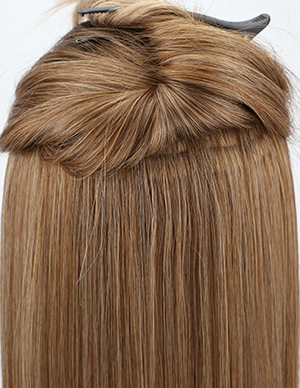
  • Use the tail comb to draw a horizontal line from ear to ear. Clip the top half of your hair up and out of the way. Take a thin subsection from the bottom half—about 1 to 2 centimeters thick. This subsection should be no thicker than the width of the tape weft.
  • Why thin sections matter: Thick sections prevent the two tape wefts from sandwiching your hair properly. The bond will feel bulky and may slip within days.
  • 3. Apply the First Tape Weft
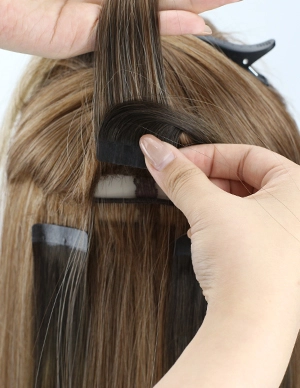
  • Peel the protective backing off one tape in extension weft. Place the sticky side against the underside of your thin subsection, approximately 2 to 3 millimeters away from the scalp. Press firmly for five seconds.
  • 4. Sandwich the Natural Hair
  • Take a second tape in extension weft. Peel off its backing. Align it directly over the first weft, with your natural hair in the middle. Press both wefts together for at least 10 seconds. The adhesive activates through pressure and body heat.
  • 5. Repeat in a Brickwork Pattern
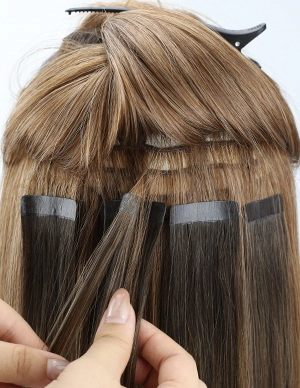
  • Continue working upward from the nape of your neck. Stagger the placement like a brick wall—do not line up all wefts in straight rows. Leave about one centimeter of space between each bond. This staggered pattern prevents visible lines and allows your scalp to breathe.
  • Pro tip: Use fewer tape in extensions near your crown. Too many bonds at the top create unnatural volume and discomfort.
  • 6. Seal with Low Heat (Optional but Recommended)
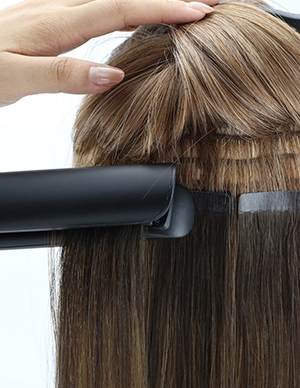
  • Set your flat iron to the lowest heat setting (around 170°F or 80°C). Quickly clamp each bonded area for two seconds. This heat sets the adhesive more firmly. Let the bonds cool completely before touching or styling.

How To Apply Tape In Extensions?

Proper application determines how long your tape in extensions will last. Follow these modular steps carefully.
  • 1. Prepare the Hair and Tools
  • Wash your hair with a clarifying shampoo. Do not use conditioner, oils, or serums before application. Natural oils prevent the adhesive from bonding correctly. Dry your hair completely. Even slightly damp hair weakens the glue.
  • Tools you need:
  • Tail comb
  • Alligator clips or sectioning clips
  • Tape in extensions (enough for full or partial coverage)
  • Flat iron (for sealing, optional)
  • 2. Section the Hair Correctly
  • Use the tail comb to draw a horizontal line from ear to ear. Clip the top half of your hair up and out of the way. Take a thin subsection from the bottom half—about 1 to 2 centimeters thick. This subsection should be no thicker than the width of the tape weft.
  • Why thin sections matter: Thick sections prevent the two tape wefts from sandwiching your hair properly. The bond will feel bulky and may slip within days.
  • 3. Apply the First Tape Weft
  • Peel the protective backing off one tape in extension weft. Place the sticky side against the underside of your thin subsection, approximately 2 to 3 millimeters away from the scalp. Press firmly for five seconds.
  • 4. Sandwich the Natural Hair
  • Take a second tape in extension weft. Peel off its backing. Align it directly over the first weft, with your natural hair in the middle. Press both wefts together for at least 10 seconds. The adhesive activates through pressure and body heat.
  • 5. Repeat in a Brickwork Pattern
  • Continue working upward from the nape of your neck. Stagger the placement like a brick wall—do not line up all wefts in straight rows. Leave about one centimeter of space between each bond. This staggered pattern prevents visible lines and allows your scalp to breathe.
  • Pro tip: Use fewer tape in extensions near your crown. Too many bonds at the top create unnatural volume and discomfort.
  • 6. Seal with Low Heat (Optional but Recommended)
  • Set your flat iron to the lowest heat setting (around 170°F or 80°C). Quickly clamp each bonded area for two seconds. This heat sets the adhesive more firmly. Let the bonds cool completely before touching or styling.
Spread the word
Was this article helpful?
YesNo

Leave a Comment

Your email address will not be published. Required fields are marked *

Scroll to Top