
Bad Odor in Hair Extensions
Causes & How to Eliminate
Summary:
According to HairFlair’s guide on extension care, “most chemical smells in Remy hair1 result from sterilization processes and are not a defect.” Similarly, Luxury Hair Insider notes that “vinegar soaks neutralize alkaline residues better than any commercial product.”
Bad odor is often from chemical processing or moisture, not poor quality.
White vinegar removes chemical smells; baking soda tackles mildew.
Never store damp extensions — breathable bags prevent recurrence.
If bad odor persists after 3 treatments, request a return.
Why do my hair extensions smell like chemicals?
If you’ve unboxed a set of Remy human hair extensions and noticed an unexpected scent, you’re not alone. Even premium hair can arrive with a noticeable bad odor — ranging from sharp chemical notes to a musty, rotten smell.
This guide explains exactly why that happens and how to eliminate bad odor for good. Most smells are reversible and do not indicate a defective product.
Common causes of bad odor in Remy hair
Understanding the source of the smell is the first step toward solving the problem. The origin of the odor usually tells you exactly how to treat it.
1. Chemical processing residues2
High-quality Remy hair is often treated with dyes, sterilizers, and preservatives. Residues include:
2. Bacterial or mold growth
Hair is organic. If packaged while damp or stored in humid conditions, bacteria and mold produce a musty bad odor.
3. Rancid coatings
Silicone sprays and metallic salts in dyes can oxidize over time, releasing unpleasant smells.
4. Heat damage during shipping
Prolonged storage in hot, non-ventilated containers causes thermal degradation, intensifying any existing chemical aromas.

How can I safely remove odors at home?
Below is a treatment comparison table to help you choose the right method based on the type of bad odor you detect.
| Odor Type | Best Treatment | Soak Time | Drying Method |
|---|---|---|---|
| Chemical / Ammonia | White vinegar soak | 15-20 min | Air-dry, ventilated area |
| Musty / Mildew | Baking soda paste | 10-15 min | Sunlight (30-60 min) |
| Lingering / Unknown | Activated charcoal bag | 24-48 hrs | Shake off dust, air-dry |
| General freshness | Vodka/water spray | N/A | Complete air-dry |
Vinegar soak (best for chemical smells)
What you need: White vinegar, cool water (below 20°C/68°F), large bowl.
Step-by-step:
Do not exceed 30 minutes — acid can weaken hair bonds.
Baking soda treatment (for mildew and musty odors)
Make a thick paste with baking soda and water. Massage into wefts, focusing on smelliest areas. Leave for 10–15 minutes, then rinse with cold water. For best results, dry in direct sunlight for 30–60 minutes — UV rays naturally deodorize.
Activated charcoal deodorizing (for stubborn odors)
Place dry extensions in a sealable bag with 2–3 activated charcoal packets. Seal tightly and leave for 24–48 hours. Remove and shake off dust. This method absorbs even lingering bad odor without wetting the hair.
Vodka or rubbing alcohol spray (quick freshening)
Mix 50% vodka or isopropyl alcohol with 50% water in a spray bottle. Lightly mist from 12 inches away. Allow to air-dry completely.
Pros: Evaporates quickly, removes odors.
Cons: Can dry out hair; use sparingly on colored extensions.

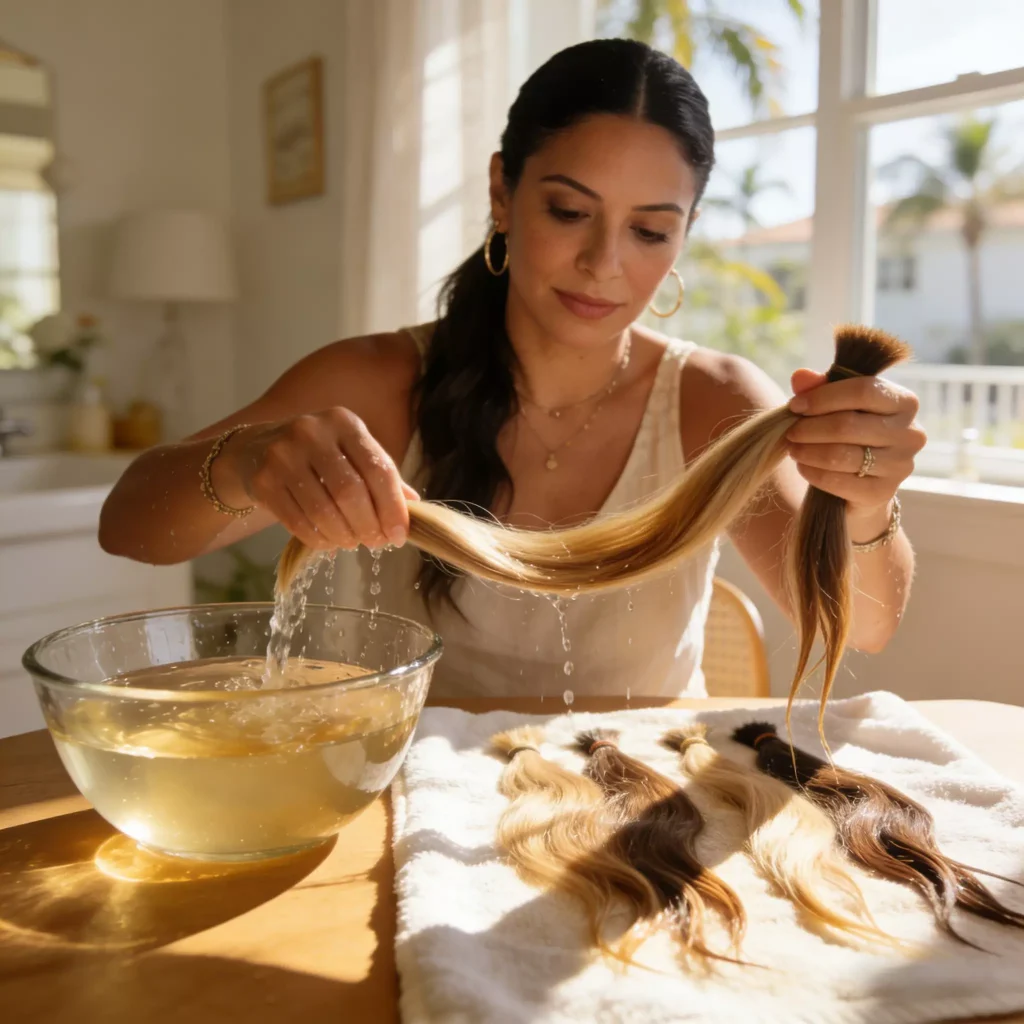
Real-life example: Salvaging extensions after shipping delay
Maria, a stylist in Florida, received her Remy hair after 3 weeks in a hot warehouse. The hair had a faint chemical smell — slightly unpleasant but not overwhelming. She did a quick vinegar soak (10 minutes), gently rinsed, and let them air-dry in indirect sunlight for 30 minutes. The odor disappeared completely. Her extensions lasted 6 more months.
Frequently Asked Questions (FAQ)
Final thoughts
A bad odor in Remy human hair extensions is rarely a sign of irreversible damage. In most cases, these odors are a byproduct of standard processing and shipping — not a defective product. By identifying the specific smell and applying the right treatment (vinegar for chemicals, baking soda for mildew, charcoal for stubborn cases), you can restore freshness completely. Proper storage and immediate airing-out prevent recurrence. If the bad odor survives three deodorizing attempts, request a return. Otherwise, your extensions are ready to wear with confidence.
Note:
- Human hair extensions where the cuticles are kept intact and aligned in the same direction, reducing tangling and improving quality. ↩︎
- Leftover chemical compounds (e.g., formaldehyde, sulfur, ammonia) from sterilization, dyeing, or preservation treatments applied to hair extensions. ↩︎
- Hair extensions that have been tested for harmful substances and meet environmental and safety standards. ↩︎
Related Resouces:
About the author
