
Sew In Extensions How to
Wear & Remove Them Properly for a Natural Look and Better Hair Care
Summary:
Sew in extensions add length and volume, but a comfortable foundation, regular maintenance, and careful removal are essential. The American Academy of Dermatology cautions that weaves and extensions can damage natural hair without appropriate care. This guide explains the main steps for traditional braided sew-ins, from preparing the base to releasing the stitching1, while highlighting common mistakes that can increase tangling, tension, and breakage.
Key Takeaways:
For better results with sew in extensions, remember these three essential rules:
Foundation First: Install on clean, dry hair with comfortable braids and an appropriate weft weight.
Safe Removal: Identify and release the sewing thread carefully. Never pull attached wefts free.
Hair Recovery: Unbraid, detangle, wash, and condition before reinstalling.
Sew In Extensions: How to Wear & Remove Them Properly for Healthy, Beautiful Results
Sew in extensions are attached by stitching hair wefts onto a supporting base, usually cornrow braids. Unlike clip-ins, they remain attached between styling sessions and require ongoing maintenance. This guide covers traditional braided sew-ins; beaded-row installations require different removal techniques. An experienced stylist should assess your hair and handle installation and removal.
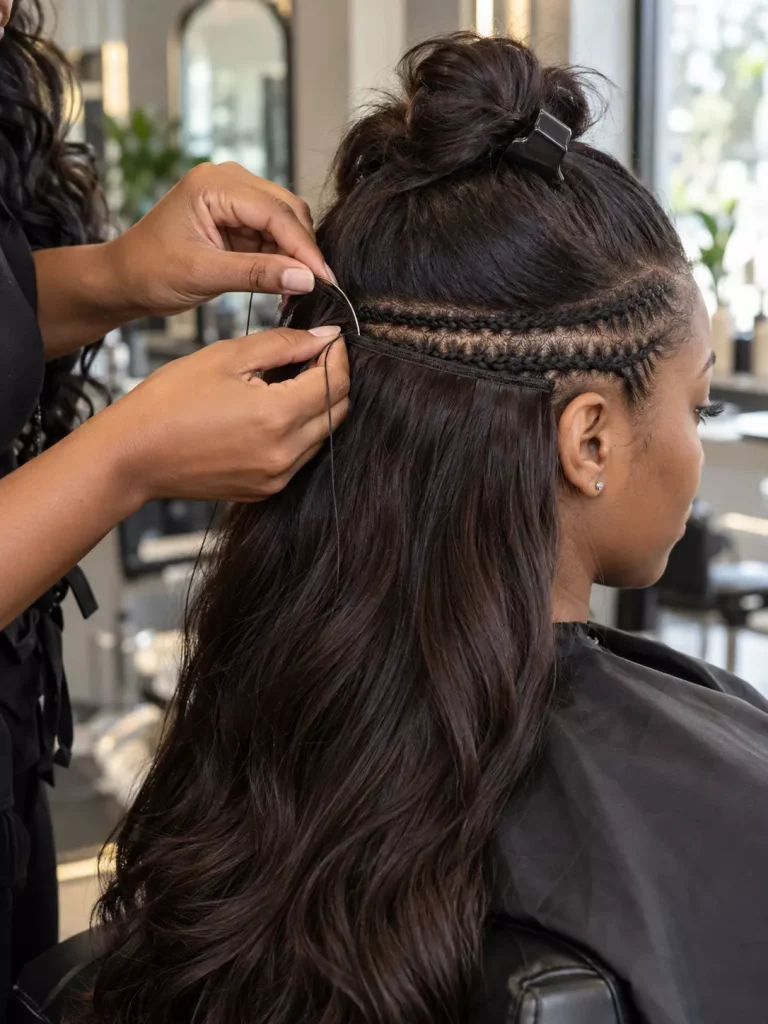
Sew In Extensions How to Wear
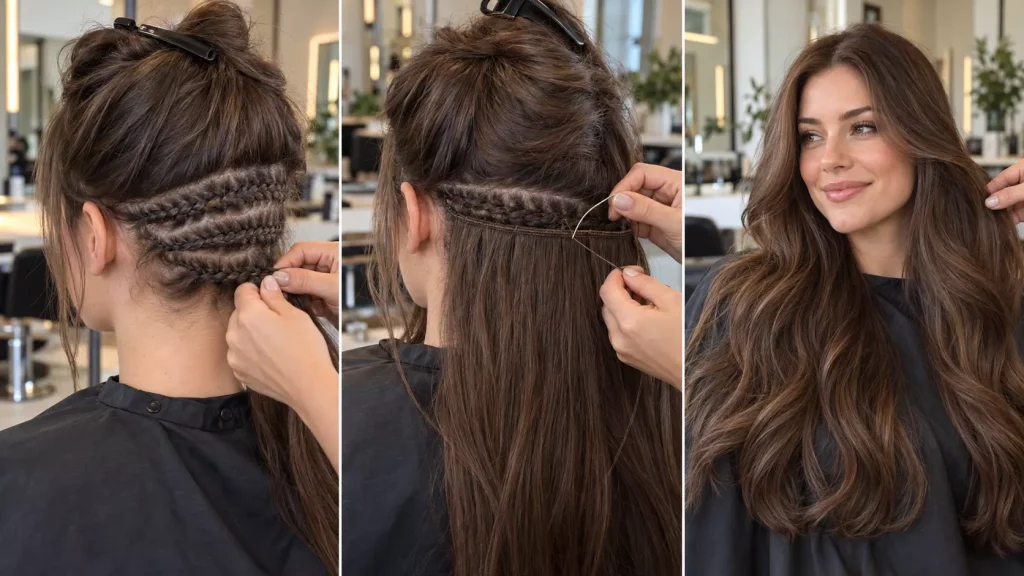
Wash & Detangle Hair: Begin with clean, fully dry hair. Gently detangle from the ends upward before braiding.
Braid the Base: Cornrows should lie flat and support the wefts without painful pulling. The pattern should suit your hair density and condition.
Choose Suitable Wefts: Select human hair wefts with a texture, length, and weight appropriate for your natural hair.
Plan the Placement: A stylist typically works from the lower sections upward, following the chosen braid pattern.
Use Appropriate Tools: A curved weaving needle and suitable sewing thread help secure the wefts to the braided base.
Secure Without Overtightening: Stitches should hold the wefts without uncomfortable tension. Speak up immediately if the installation hurts.
Plan the Leave-Out: If natural hair is left out for blending, its placement should suit the style and minimize repeated heat styling.
Blend Gently: Match the extensions to your natural texture where possible. For heat styling, apply heat protectant and use the lowest effective temperature.
Keep Styling Comfortable: Avoid tight ponytails and backcombing near the attachment points, which can add pulling and tangling.
Sew In Extensions How to Remove
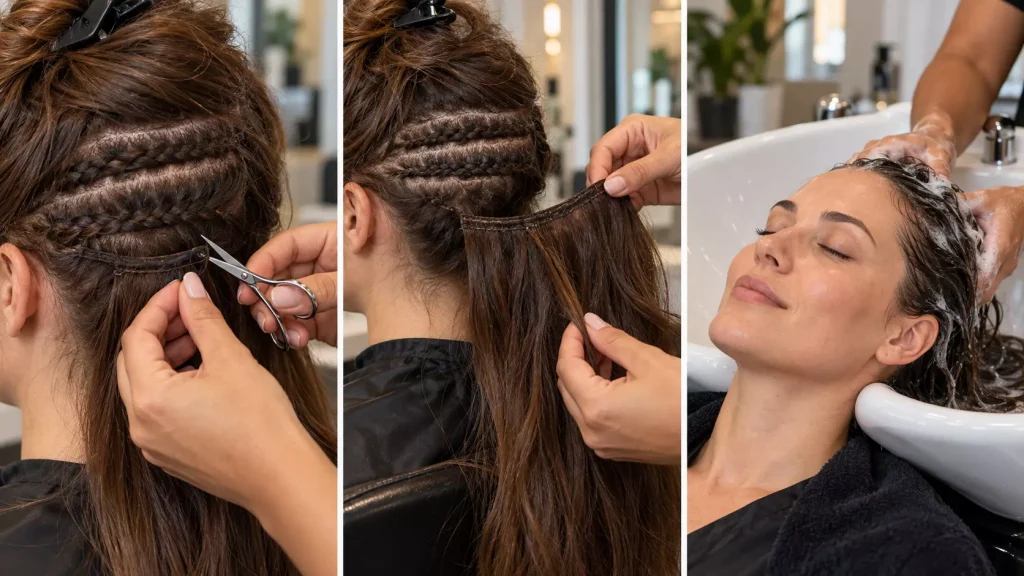
Work in small sections with clear visibility. Identify the installation thread separately from your natural hair and the weft seam before cutting.
A stylist should carefully snip only the exposed sewing thread. If the thread cannot be clearly distinguished, stop rather than risk cutting hair.
Remove the loosened stitches gradually, supporting each weft as it releases. Do not pull it through remaining thread or tangles.
If a section resists, check for missed stitches. Leave tightly tangled areas to a professional.
Unbraid & Detangle: After all wefts are removed, undo the cornrows and gently work out trapped shed hair before washing.
Wash & Condition: Cleanse away buildup and condition the lengths to improve softness and manageability.
Assess Before Reinstalling: Choose a low-tension style and allow a break from extensions. Tenderness, breakage, or thinning should be addressed before another installation.
Key Tips for Wearing & Removing
Frequently Asked Questions (FAQ)

Final Thoughts
Learning how to wear and remove sew in extensions starts with a comfortable foundation4 and careful handling. Keep the scalp clean, dry the braided base thoroughly, and release every stitch before lifting away a weft. Professional support can help you manage the style while reducing unnecessary stress on your natural hair.
Note:
- The process of using a needle and thread to secure the wefts. ↩︎
- A form of hair loss caused by prolonged or excessive tension on the hair follicles. In the context of sew-ins, it can result from braids that are too tight or wefts that are sewn with excessive tension. ↩︎
- How closely hair strands grow together in a particular area. ↩︎
- The supporting base, such as braids, to which extensions are attached. ↩︎
Related Resouces:
About the author
